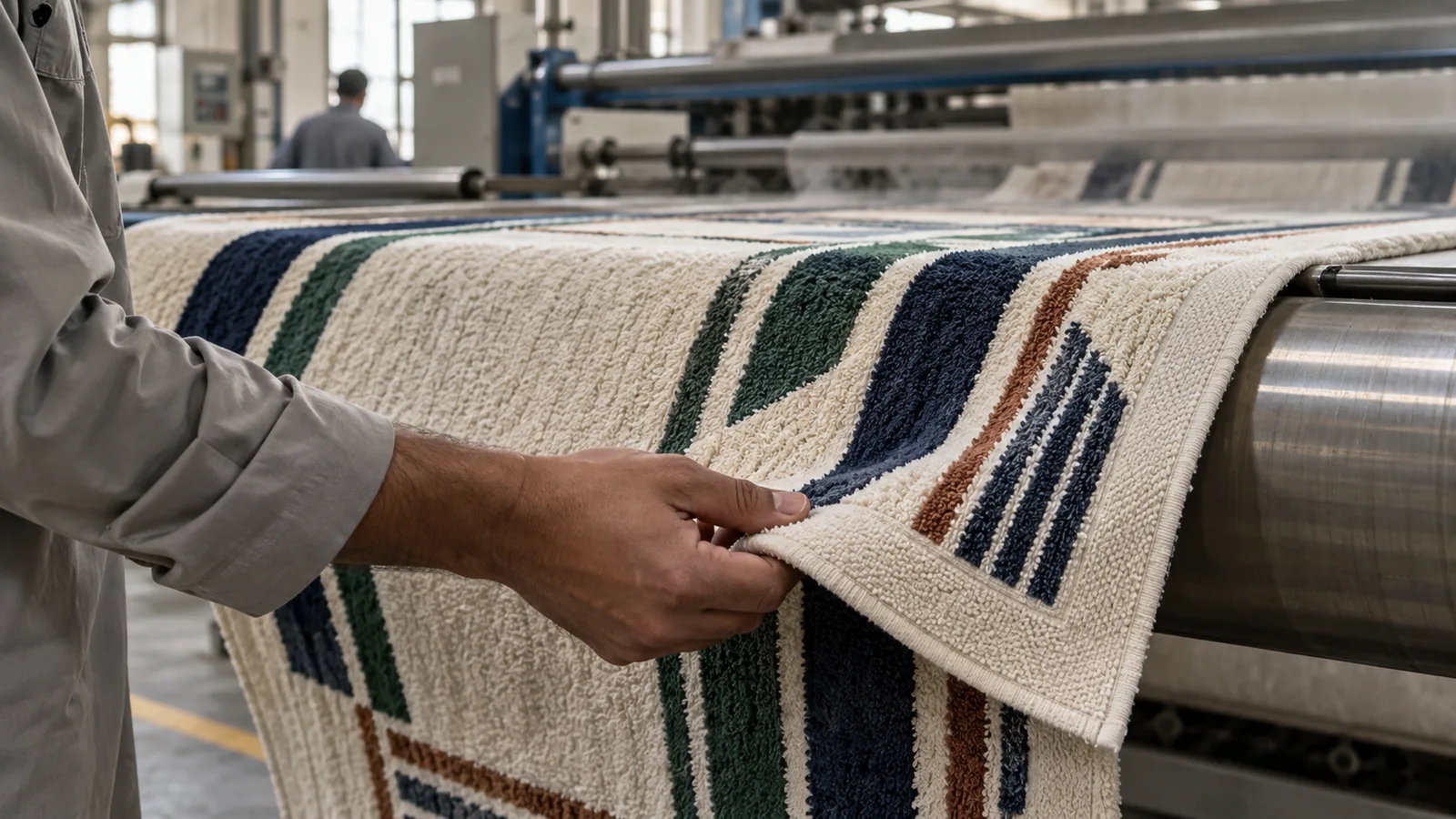
For custom beach towels wholesale, define the selling or service channel, finished size, base construction, fiber content, target mass basis, print method, artwork repeat, color references, face and reverse requirements, washing route, label market, packaging, quantity, and in-hand date before comparing prices. Approve a physical printed sample after the agreed wash and dry sequence. The purchase order should name test methods, acceptance limits, approved artwork, sample revision, inspection plan, and reorder references.
This guide is for resorts, beach clubs, retailers, lifestyle brands, promotional distributors, event teams, importers, and procurement groups. A towel sold as a branded retail item needs different artwork, labeling, packaging, and replenishment controls from a resort towel issued through a laundry or a one-event promotional piece.
There is no universal best beach-towel size, GSM, print route, minimum order, wash life, or lead time. A useful specification connects the towel's job with the mill process and the buyer's route to market. Loft Weave develops that record through a written brief, physical sampling, named tests, and production approval.
Define the beach-towel program before choosing artwork
Start with the route to the user. A resort may issue and collect towels through a controlled operation. A retailer needs consistent shelf presentation, product labeling, barcodes, and repeat colors. A promotional distributor may handle several sponsor versions with one delivery deadline. An online brand may need individual bags, inserts, carton assortments, and product photographs that match the delivered print.
Write the end use, quantity by SKU, artwork count, target market, point of sale, laundry route, packaging level, delivery destination, and in-hand date. State whether the towel is sold, gifted, rented, or retained as operating inventory. These facts influence the construction, printing, labeling, sample route, inspection plan, and whether the order follows an established private-label towel program or a more involved OEM development path.
Keep this article separate from a pool-operation specification. The wholesale pool towel guide covers wet-return routes, resort handling, chlorine exposure, and fleet control. A custom beach towel program often puts more weight on full-surface artwork, retail or promotional presentation, brand color, and repeatability across seasonal collections.
Choose the base towel before selecting a print method
Printed beach towels may use cotton terry, a sheared or velour face, flat-woven cotton, blended constructions, or a synthetic base. The name alone does not identify the pile, ground, yarn, finishing, reverse surface, or print compatibility. Ask for a construction sheet and an unprinted sample before approving color or artwork.
A terry face provides visible loops and a three-dimensional surface. Fine lines can break across the pile, and ink or dye appearance may shift as the loops move. A sheared face can offer a flatter print surface, while the reverse may retain loops for a different hand and absorbency profile. Flat-woven constructions behave differently again. Buyers should compare the exact finished towel rather than treating all cotton beach towels as one category.
ASTM D5433-24 addresses performance characteristics for specified towel products used in institutional and household settings and allows purchaser and supplier agreement to establish requirements. A beach towel may not fit every part of that stated scope. Confirm method applicability with a qualified textile laboratory and put the agreed properties, methods, and limits in the contract.
Use the cotton terminology guide to separate fiber origin, preparation, spinning, and marketing language. If pile and ground use different fibers, record each component and review how the finished product will be labeled.
Set finished size, GSM, total mass, and tolerances together
Place finished length, width, hem depth, border width, print field, repeat position, and fold lines on a dimensioned drawing. State whether dimensions apply before washing, after a defined wash and dry process, or at another agreed condition. Catalogue descriptions such as oversized, resort, or premium are not measurements.
ASTM D3776/D3776M-20(2025) provides four options for fabric mass per unit area. Ask which option, specimen type, conditioning, and reporting basis produced the quoted GSM. A finished towel includes hems, borders, printed areas, moisture, and process variation that may not match a small fabric swatch.
A simple arithmetic check helps expose a quote that needs clarification. A towel measuring 80 cm by 160 cm has a rectangular area of 1.28 m2. At 400 g/m2, the simple calculated fabric mass is 512 g before differences caused by borders, hems, decoration, conditioning, and the selected test method. These numbers illustrate the calculation; they are not a recommended beach-towel size or GSM.
The towel GSM guide explains why area, total weight, pile, construction, absorbency, drying, freight, and user experience must be read together. Set realistic manufacturing tolerances by agreement and distinguish an average result from an individual-piece limit.
Compare print methods on the approved base textile
The same artwork can look and feel different on reactive, pigment, transfer, or other print routes. Fiber content, pretreatment, pile, print penetration, fixation, washing, finishing, order scale, and color count all matter. Ask the supplier to name the proposed process and show a production-representative sample on the intended towel.
| Print route to investigate | What to confirm | Buyer sample checks | Common specification gap |
|---|---|---|---|
| Reactive print on compatible cellulosic fiber | Dye system, pretreatment, fixation, wash-off, face and reverse expectation | Shade, penetration, hand, wash change, staining, fine detail | Artwork approved without the actual base towel or process |
| Pigment print | Binder system, cure route, coverage, hand, abrasion and wash criteria | Surface feel, cracking, crocking, detail, shade after washing | Only a visual mockup is reviewed |
| Transfer or sublimation on a compatible synthetic face | Fiber construction, print side, reverse material, heat route, white base | Color, hand, edge definition, heat effects, reverse appearance | The fiber and face construction are omitted from the quote |
| Yarn-dyed or jacquard alternative | Yarn colors, face and reverse, repeat, pile direction, order scale | Woven clarity, hand, border, laundering, shade continuity | A woven option is compared with print on artwork alone |
Do not describe a route as permanently colorfast or fade-proof. A named test under defined conditions can support a result; it cannot guarantee appearance under every combination of sun, salt, chlorine, detergent, sunscreen, heat, and abrasion. The custom jacquard towel guide is useful when woven branding may suit the project better than a surface print.
Match the process to the fiber and towel face
A process developed for a smooth synthetic fabric should not be assumed to perform on deep cotton terry. Ask what receives the color, how the print reaches moving pile, and whether the reverse is intentionally unprinted. Approve the complete face and reverse, not one tightly cropped photograph.
Separate color count from color control
A file can contain many digital colors, but production still needs named targets, an agreed viewing condition, and a rule for tolerances. Identify brand-critical shades and less critical supporting tones. A commercial team should know who may approve a deviation and how that approval is recorded.
Build production artwork at finished scale
Provide vector artwork or the supplier's required production format, plus a raster reference that shows intended appearance. Include the finished towel outline, safe area, trim and hem allowances, borders, pile direction, print repeat, orientation, face and reverse, fold lines, logo dimensions, and all color references. Record the file name and revision.
Large beach towels make repeat errors visible. A stripe that drifts toward one hem, a motif clipped by the border, or a logo that crosses a fold can become a full-order problem. Ask the factory to return a production file rather than approving the buyer's presentation art unchanged.
If the program includes embroidery, a woven border, or a sewn label in addition to print, show those placements on the same drawing. The custom embroidered towel guide covers stitch density, topping, backing, pile, and sample controls. A printed field and a stitched logo can influence hand and folding in different ways.
Review artwork at the distance of use
Inspect close detail and the complete towel. Fine registration matters near the fabric, while brand recognition may be judged from several meters away on a lounger, display, or retail photograph. Agree on normal viewing distance and lighting for visual acceptance.
Use a sample route that ends with a signed printed towel
A useful sample path may include an unprinted quality sample, base-color and print references, digital production artwork, printed development strike-off, finished towel sample, corrected sample, and pre-production sample with final label and packaging. Existing repeat orders can combine stages, but a new base construction, print route, or artwork usually needs more evidence.
Keep an untouched control and a washed sample. Mark every sample with supplier, date, artwork revision, base-towel code, print process, color references, and approval status. The towel sample testing checklist provides a broader record for dimensions, mass, absorbency, color, lint, seams, and appearance.
A screen proof can confirm layout but not pile coverage, hand, penetration, reverse appearance, shrinkage, color transfer, or packaging folds. Bulk production should reference the signed physical towel and the controlled digital files together.
Test laundering, dimensional change, and print appearance
ISO 6330:2021 provides domestic washing and drying procedures used for textile testing. ISO 5077:2007 describes preparation, marking, and measurement for dimensional change after washing and drying. The buyer still needs to choose a procedure that represents the actual product and agree on specimen count, conditioning, cycles, and acceptance limits.
ISO 105-C06:2010 covers color fastness to domestic and commercial laundering using specified reference conditions. ISO records the edition as current after review in 2026. The standard also notes that industrial and hospital articles may face more severe procedures and that other detergent or bleach systems may require different conditions.
Inspect more than shade. Record length and width change, skew, edge wave, hem distortion, pile change, reverse appearance, print cracking or loss, staining of adjacent materials, lint, and hand. A towel can meet a dimensional limit and still fail the buyer's visual standard.
Keep test language narrow
State that a sample achieved an agreed result under a named method and condition. Do not convert a laboratory result into an unlimited wash-life claim. Real use adds mixed loads, overloaded machines, local water, chemicals, sunscreen, sand, drying heat, storage, and handling that the test may not reproduce.
Control rubbing, light exposure, wet use, and absorbency claims
ISO 105-X12:2016 covers resistance of textile color to rubbing off and staining other materials, with dry and wet options. This matters when a dark or saturated printed towel touches swimwear, light upholstery, bags, or neighboring towels. Define the print face, dry and wet conditions, required rating, and adjacent material.
ISO 105-B02:2014 uses a xenon arc source representative of natural daylight to evaluate color response to artificial light. ISO reconfirmed the edition in 2025. A buyer should specify the exposure, references, assessment, and acceptance requirement rather than asking for a vague sunlight-proof claim.
ASTM D4772-26 addresses surface water absorption of terry fabrics. Confirm its current scope and use it only for a suitable terry construction. It should not be presented as proof for a flat weave, synthetic face, or complete beach-use experience outside the method.
Use appearance standards beside numbers
Retain approved shade and print references, then document unacceptable banding, missing print, double images, blurred edges, unprinted pile, strike-through, shade shifts, and face-to-reverse variation. Note viewing light and distance. A defect catalogue helps inspectors apply the same decisions across shifts and locations.
Review fiber labels, country of origin, care information, and logo rights
The U.S. Federal Trade Commission's Textile Fiber Rule requires covered textile products to disclose generic fiber names and percentages by weight, the responsible manufacturer or marketer identity, and the country where the product was processed or manufactured. The FTC guide Threading Your Way Through the Labeling Requirements explains treatment of towels and other flat goods, imported products, label placement, and recordkeeping.
The FTC's Calling It Cotton guidance notes that when towel loops and ground use different generic fibers, the label must account for each component's fiber weight. Do not assume that a cotton pile description proves the entire towel is 100 percent cotton.
Care information should match the base towel, print, sewn label, and packaging claim. Confirm the legal treatment for the target market and sales channel with qualified counsel or a compliance adviser. The FTC Care Labeling Rule is directed to wearing apparel and certain piece goods; do not cite it as a blanket towel care-label requirement.
The buyer should own or have permission to use every logo, illustration, photograph, character, and sponsor mark. The United States Patent and Trademark Office explains that a trademark can be a word, phrase, symbol, design, or combination that identifies source. Keep written authorization and define ownership of production files, printing screens or cylinders, and leftover branded goods.
Design packaging around the towel and sales channel
A bulky printed towel can be folded several ways, and each fold changes logo visibility, barcode placement, package dimensions, carton count, and retail presentation. Approve the fold on the washed finished sample. Record tissue, band, insert, bag, barcode, hanger, seal, assortment, carton quantity, and carton marks.
A resort program may need compact laundry handling rather than retail packaging. A promotional kit may require a presentation fold and event-specific insert. An ecommerce item may need protection from moisture and abrasion without excess package volume. Compare the packed sample with warehouse, fulfillment, and display requirements before bulk materials are ordered.
Ask for packaging dimensions and gross carton weight with the actual towel count. Those figures affect storage, pallet planning, freight, and manual handling. Do not calculate landed cost from an unpacked sample.
Compare MOQ, price, sampling, and delivery on the same assumptions
MOQ may apply per base construction, size, body color, artwork, print process, packaging version, or production run. Ask the supplier to name the controlling unit. The wholesale towel MOQ guide shows why one total order quantity can hide several smaller factory minimums.
Compare unit price together with artwork preparation, screens or print setup, sampling, base towel, printing, labels, packaging, testing, inspection, inland transport, export documents, freight, duties, and destination charges. The wholesale towel pricing guide provides a cost-per-dozen worksheet for normalizing offers.
Build the schedule backward from the required in-hand date. Include file review, sample production, courier transit, corrections, base-towel production, printing, fixation and finishing, inspection, export clearance, freight, customs, and delivery buffer. A factory production time is one part of the delivered schedule.
Write a beach towel RFQ that factories can quote consistently
| RFQ field | What to state | Evidence to request |
|---|---|---|
| Program and destination | Resort, retail, promotion, event, quantity by SKU, market, address, in-hand date | Production and delivery schedule with assumptions |
| Base towel | Fiber components, yarn, pile or face, ground, weave, finished size, mass basis, hems, border, color | Construction sheet and unprinted quality sample |
| Printing | Process, pretreatment, face/reverse, artwork revision, repeat, colors, placement, finishing | Production file, strike-off, and finished printed sample |
| Testing | Wash and dry route, dimensions, mass, laundering, rubbing, light, absorbency where applicable, appearance limits | Named methods, sample count, reports, and results |
| Labels and packaging | Fiber, origin, responsible party, care, barcode, band or bag, insert, fold, assortment, carton marks | Label files and complete packed sample |
| Commercial terms | MOQ basis, setup, sample and unit price, Incoterm, currency, payment, inspection, freight | Itemized quote and validity period |
| Approval and reorders | Signed sample, artwork owner, retained standards, change disclosure, revision control | Reference-pack list and reorder procedure |
Send the same RFQ to each shortlisted factory. Use the towel supplier checklist to compare evidence, communication, sample discipline, capacity, and corrective-action process. The certifications guide helps buyers verify certificate holder, facility, product scope, standard, issue date, and validity rather than relying on a logo in a presentation.
Inspect the towel, print, label, and pack-out as one product
Write the inspection plan before production. Define the lot, sample size, critical, major, and minor defects, measurements, test method, acceptance limits, and authority to approve a concession. Inspect random packed units rather than only samples selected for presentation.
Check finished dimensions, mass on the agreed basis, body shade, pile or face, hems, border, loose loops, stains, print placement, repeat alignment, registration, color, penetration, reverse appearance, labels, barcodes, folding, individual packs, assortment, carton quantity, and carton marks. Compare inspected pieces with the signed pre-production sample and artwork revision.
If the goods enter the United States, align the production record with the Pakistan to USA towel import guide. Classification, origin marking, invoice description, valuation, and importer responsibility require separate review.
Protect repeat orders with a controlled reference pack
Retain the signed towel, unprinted base sample, production artwork, repeat map, color references, base construction, yarn and fiber records, print process, label files, packaging standard, carton marks, test reports, inspection report, and approved deviation record. Give the pack a revision number and approval date.
For every reorder, ask the factory to disclose changes in yarn source, fabric production, pretreatment, print chemistry, machine, fixation, washing, finishing, label, packaging, and subcontractors. A new base towel or print route is not the same product because the artwork file stayed unchanged.
Compare a reorder sample with the retained standard under the same lighting, conditioning, washing, and viewing rules. Review critical measurements and the packed fold before bulk release. This creates a stronger record than an old photograph or a color name.
Custom beach towel buyer checklist
- End use, sales channel, destination, quantity by SKU, artwork count, and in-hand date are written.
- Fiber components, base construction, finished size, mass basis, hems, border, face, reverse, and tolerances are specified.
- Print process, pretreatment, artwork revision, repeat, colors, placement, and finishing route are approved.
- Physical printed sample passes the agreed wash, dimension, rubbing, light, absorbency where applicable, and appearance checks.
- Label, origin, responsible-party identity, care information, barcode, fold, packaging, and carton marks are approved.
- MOQ basis, setup, itemized price, sampling, Incoterm, freight, inspection, and delivery assumptions are comparable.
- Inspection plan and visual defect catalogue are agreed before production.
- Signed sample and revision-controlled reference pack are retained for reorders.
Frequently asked questions
What material is best for custom printed beach towels?
No single material is best for every program. Cotton terry, sheared cotton faces, flat-woven cotton, blends, and compatible synthetic constructions differ in print surface, reverse hand, absorbency, drying, washing, weight, and price. Define the sales or service job, then test the exact printed construction instead of choosing by fiber name alone.
What GSM should a wholesale beach towel use?
Choose GSM with finished size, total mass, pile or face construction, absorbency, drying route, packing volume, freight, and user preference. Ask how GSM was measured and in what product state. Compare conditioned samples after the intended wash sequence rather than accepting a universal weight range as a quality rule.
Which printing method is best for custom beach towels?
The suitable method depends on fiber content, towel face, artwork, color targets, hand, reverse appearance, order scale, washing, and price. Reactive, pigment, transfer, and woven routes have different requirements. Approve the named process on the intended base towel after laundering; a digital mockup cannot prove production performance.
How should buyers test a printed beach towel sample?
Keep an untouched control and test representative printed samples through the agreed wash and dry procedure. Record dimensions, mass, shade, wet and dry rubbing, print appearance, staining, pile or face change, hems, borders, lint, hand, packaging fold, and absorbency where the chosen method and construction make that test applicable.
What should buyers send for a custom beach towel quote?
Send quantity by SKU, finished size, base construction, fiber components, target mass basis, print process or performance need, artwork and colors, face and reverse requirement, labels, packaging, tests, inspection plan, destination, Incoterm, and in-hand date. Ask suppliers to separate setup, sampling, production, testing, packaging, inspection, and freight costs.
Primary sources used
- ASTM D5433-24, Standard Performance Specification for Towel Products for Institutional and Household Use
- ASTM D3776/D3776M-20(2025), Mass Per Unit Area of Fabric
- ASTM D4772-26, Surface Water Absorption of Terry Fabrics
- ISO 6330:2021, Domestic Washing and Drying Procedures for Textile Testing
- ISO 5077:2007, Dimensional Change in Washing and Drying
- ISO 105-C06:2010, Colour Fastness to Domestic and Commercial Laundering
- ISO 105-X12:2016, Colour Fastness to Rubbing
- ISO 105-B02:2014, Colour Fastness to Artificial Light
- Federal Trade Commission, Textile Fiber Rule
- Federal Trade Commission, Threading Your Way Through Textile Labeling Requirements
- Federal Trade Commission, Calling It Cotton
- United States Patent and Trademark Office, What is a trademark?